BACKGROUND
Neighbours in the Old North community have created Advocates for Calmer Traffic in Old North (ACTION) to focus on improving safety on neighbourhood roads.
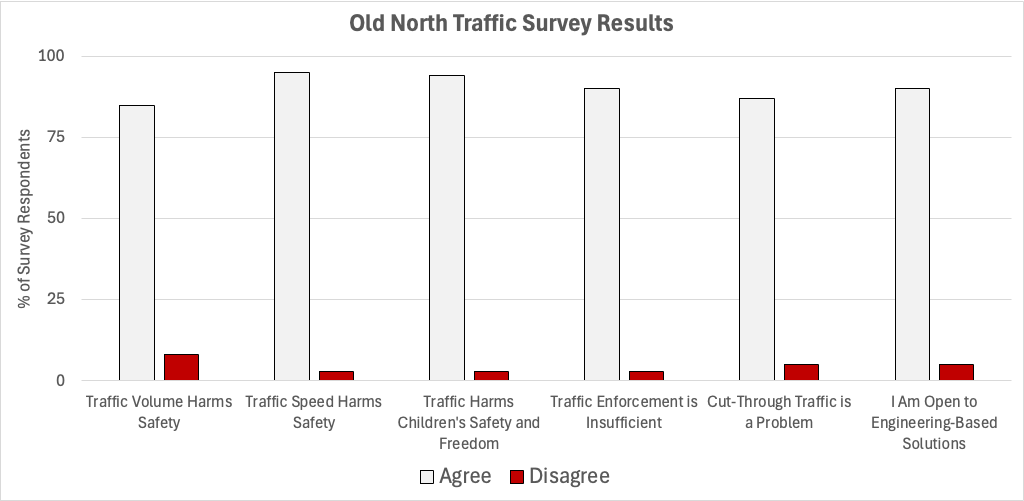
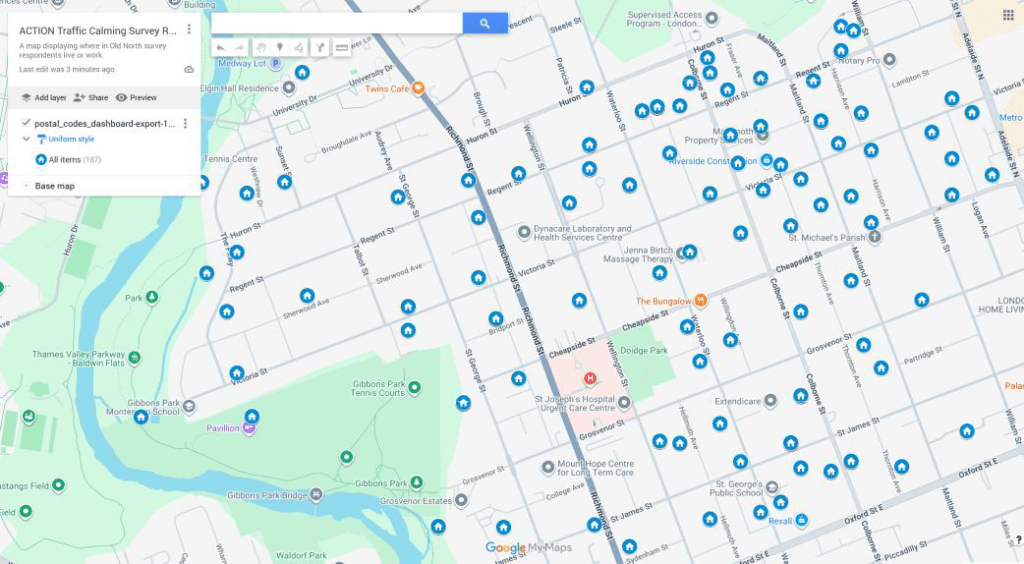
ACTION surveyed over 236 area residents to assess the community’s concerns regarding traffic safety issues and to determine the extent of support for initiatives designed to enhance safety for children and adults on Old North’s roads, sidewalks, and bike paths.
This summary provides a foundational understanding of the community’s perspective to inform immediate policy, enforcement, and engineering interventions
SURVEY RESPONDENT COMMENTS
1.0 Summary of Key Concerns from Resident Submissions
The public feedback highlights several themes that create a sense of danger for residents. These themes are consistently framed as systemic safety failures impacting the daily life of residents and the well-being of the community. The following sections detail the most prominent concerns.
1.1 Pervasive Speeding and Aggressive Driver Behaviour
Excessive vehicle speed is the most frequently and emphatically cited concern among residents. The feedback makes it clear that speeding is a constant and widespread issue, occurring not only on major arterial roads like Richmond Street but also on quieter residential side streets, which are used as high-speed “cut throughs” by commuters, including hospital employees and drivers diverted by construction. This behaviour is compounded by a pattern of aggressive driving, which residents attribute to a specific mindset. As one submission responds:
“There seems to be a pervasive sense of entitlement: the road is for me and my vehicle, not other people or other modes of transportation.”
This perception that traffic laws are mere suggestions is a daily reality for residents of Old North. One resident articulates the daily fear this creates:
“I walk to work in the morning, and people are often speeding down Waterloo, Regent and Victoria and often don’t properly stop at the stop signs and I almost get hit by a car.”
The combination of excessive speed and disregard for traffic controls transforms neighbourhood streets into high-risk environments, with the danger becoming particularly acute at intersections.
1.2 Disregard for Stop Signs & Confusing Intersections
A critical breakdown in fundamental traffic safety stems from the widespread failure of drivers to obey stop signs, a primary cause of collisions and near-misses according to residents. Submissions are replete with descriptions of drivers running, rolling through, or completely ignoring stop signs, a behaviour that residents perceive as both rampant and normalized throughout the neighbourhood.
This danger is exacerbated by a compounding problem of inconsistent and confusing intersection design. Numerous residents highlight the mix of two-way, and four-way stops as a significant hazard, leading to driver confusion and wrongful assumptions of right-of-way. The intersection of Colborne Street and St. James Street is repeatedly cited as a primary example of this systemic failure, where the flawed design actively causes frequent collisions, property damage, and severe injuries.
A resident living at the epicentre of this hazard provides a stark account of the daily danger:
“I live at the corner of St James and Colborne. Not a day goes by where I DON’T hear horns beeping and tires screeching, because someone has proceeded through the 2-way stop interest, thinking it was a 4-way stop, and expecting cars going north,/south on Colborne to stop.”
1.3 The Human Cost: Grave Danger to Pedestrians and Children
The traffic violations detailed above translate into tangible, daily threats to the physical safety of pedestrians, cyclists, and especially children.
The responses convey a widespread sentiment of fear, with parents expressing grave concern for children walking to school, playing outside, or riding their bikes.
This sense of ambient danger is not limited to children; residents report feeling unsafe even when performing routine activities, with one individual noting that:
“Walking the dog feels like you are playing frogger”
Resident feedback details the foreseeable and inevitable culmination of the specific, long-standing hazards at the Colborne and St. James intersection. The following testimony recounts the traumatic event that residents see as a direct consequence of institutional inaction on this known issue:
“My child witnessed a crossing guard get hit by a car. We have had several near misses on Colborne and St James. And we are lucky no one died. This wasn’t the first time we’ve seen a T-bone accident at this intersection…”
This acute sense of danger is compounded by profound resident frustration over what they describe as a complete lack of meaningful response from the city, even after a crossing guard was struck by a vehicle at a notoriously dangerous intersection.
CONCLUDING ASSESMENT
The collective public feedback paints an unambiguous picture of a community that feels it is under siege from dangerous traffic conditions.
The residents’ concerns are not minor or isolated; they describe systemic issues of excessive speeding, hazardous intersections defined by driver non-compliance and confusing design, and a direct and constant threat to the safety of children, pedestrians, and all road users.
The submissions reflect a profound loss of confidence in the current state of neighbourhood safety in Old North and serve as an urgent plea for immediate short-term interventions and longer-term planning.
 ACTION